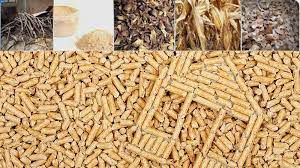
Vietnam Wood Pellet Exports: 5M Tons 2026
Kingwood · June 25, 2026
Vietnam Is the World’s #2 Wood Pellet Exporter
Vietnam exports approximately 5 million metric tons of wood pellets per year — second only to the United States in global single-country export rankings, and the dominant supplier feeding Japan’s FIT-driven biomass power market. Vietnam’s pellet export volume has grown roughly 12–15% per year since 2020, with structural drivers locked in by Japanese and Korean policy frameworks running through 2030 and beyond.
For pellet producers and equipment suppliers evaluating where to build capacity, Vietnam is the single most important Southeast Asian node. The combination of acacia plantation feedstock, established Hai Phong and Saigon Port export logistics, and direct off-take relationships with Japanese power utilities makes Vietnamese capacity the lowest-friction path into the highest-volume Asian wood pellet demand.
The Buyer Concentration: Japan + Korea = 95%
Vietnam’s wood pellet export buyer mix is unusually concentrated:
| Destination | Approx Share | Primary Procurement Channel |
|---|---|---|
| Japan | ~75% | FIT-qualified biomass power plants (METI tariff-supported) |
| South Korea | ~20% | KFQC/RPS utility procurement under Korea Forest Service oversight |
| Taiwan | ~2% | Industrial process heat (Formosa Plastics and similar) |
| EU | <2% | Niche utility, growing slowly |
| Spot / other | ~1% | Variable, opportunistic |
This buyer concentration creates both opportunity and structural risk. The Japan-Korea procurement frameworks are policy-anchored (FIT through 2032, KFQC under multi-year RPS targets), providing predictable demand. But a major policy revision in either market — particularly Japan’s potential FIT premium adjustment after 2030 — would directly compress Vietnamese export margins.
Port Infrastructure: Hai Phong and Saigon
Two ports handle the vast majority of Vietnamese pellet exports:
Hai Phong Port (North Vietnam) dominates volume, leveraging proximity to acacia plantation supply in the northern provinces (Quang Ninh, Bac Giang, Yen Bai). Most Japan-bound shipments load from Hai Phong on 8,000–15,000 DWT bulk vessels with 7–10 day transit to Japanese ports (Sendai, Niigata, Kobe).
Saigon Port (Ho Chi Minh City) handles southern-region exports, primarily from Mekong Delta and Central Highlands feedstock. Larger draft vessels can load here for Korea-bound shipments and EU spot cargoes.
Cai Mep and Quy Nhon handle smaller-volume spot market shipments and provide logistical flexibility for producers in less-concentrated regions.
Port congestion and rail-to-port logistics remain the primary domestic cost driver for Vietnamese exporters — typically 8–12% of FOB price.
Feedstock: Acacia Plantation Dominance
Vietnamese pellet production is structurally dependent on acacia plantation timber, particularly Acacia mangium and Acacia hybrid:
- Rotation cycle: 5–7 years — faster than most temperate softwood, supporting reliable supply
- Yield: 15–25 m³/hectare/year on established plantations
- Government support: Vietnam’s national plantation program targets 16.5 million hectares of forest cover by 2030, with acacia explicitly designated for export-oriented industrial use
- Sustainability profile: FSC and PEFC certified plantation area in Vietnam exceeds 350,000 hectares, supporting Japan-bound supply chain credentials
Forestry residue (sawmill offcuts, branches, bark from acacia harvest) makes up the remaining feedstock — typically 20–30% of input mass. Mixed-biomass blends with rice husk or straw are uncommon because Japanese buyer specifications favor wood-only fuel for boiler ash management and ESG reporting.
FOB Pricing: $130–$180/Ton in 2026
Industrial-grade Vietnamese wood pellet FOB pricing has settled at $130–$180/ton in 2024–2026, after the 2022 global energy crisis briefly drove spot prices above $250/ton. Most long-term Japanese off-take contracts settle around $150–$170/ton FOB Hai Phong, with the following pricing drivers:
| Driver | Direction | Approx Impact |
|---|---|---|
| Acacia plantation harvest yields | Tight supply pushes prices up | $5–$15/ton swing per harvest cycle |
| Bunker fuel costs | Tighter shipping costs lift FOB | $3–$8/ton |
| Yen-USD exchange rate | Weak yen compresses Vietnamese margins | $5–$10/ton effective |
| Sustainability certification | FSC/SBP commands premium | $10–$25/ton over baseline |
| Spot vs. long-term contract | Spot can run $20–$40 below contract | Variable |
Forward curves indicate $140–$170/ton ranges through 2028 absent major Japanese FIT policy revision.
Production Capacity Implications for New Entrants
For pellet producers and equipment suppliers thinking about Vietnam capacity expansion or greenfield entry, three engineering decisions matter:
Capacity tier. Japan and Korea off-take contracts typically start at 30,000 t/year minimum, with 100,000–200,000 t/year for utility-direct supply. That corresponds to 4–24 t/h continuous production lines. Kingwood has reference installations across this range — a 12 t/h line in Vietnam (2024) with documented 23-month payback and a 24 t/h line (2023) feeding the Japan FIT supply chain.
Feedstock specification discipline. Japan FIT-qualified fuel requires moisture ≤15%, sulfur ≤0.5%, calorific value ≥4,200 kcal/kg, and ash management per facility specification. Acacia plantation timber comfortably meets these specs at industrial line throughput when the production process is properly controlled.
Certification timeline. FSC chain-of-custody certification typically requires 4–8 months from initial application; SBP certification adds another 6–12 months on top. Producers planning to enter the Japan utility-direct off-take channel should budget for this as fixed lead time alongside equipment commissioning (typically 4–8 months from contract to first production).
Kingwood’s complete wet-feed wood pellet production line configurations are engineered for Japan-grade fuel specifications across the Vietnamese export channel, with documented commercial-scale references including the 12 t/h and 24 t/h Vietnam installations.
For procurement teams and project developers evaluating capacity expansion to serve Japan and Korea’s growing import demand through Vietnamese supply, Kingwood provides full-scope engineering services: consultation, line design, equipment manufacture, logistics, installation, commissioning, operator training, and ongoing after-sales support across all 30+ countries served — including the established Vietnam reference base.
Related: Asia-Europe Wood Pellet Supply Chain Series
This article is part of the Kingwood Wood Pellet Market Series — global biomass pellet trade flow analysis covering supply, demand, certification, and pricing dynamics:
FAQ
How many tons of wood pellets does Vietnam export each year?
Vietnam exports approximately 4.5–5.0 million metric tons of wood pellets annually as of 2024–2026, making it the world's second-largest single-country exporter after the United States. Export volumes have grown roughly 12–15% per year since 2020, driven primarily by Japan's FIT (Feed-in Tariff) biomass power generation demand and South Korea's KFQC procurement under the RPS framework.
Which countries buy the most wood pellets from Vietnam?
Japan is the dominant buyer at approximately 75% of Vietnamese pellet exports, driven by Japan's FIT-qualified biomass power plants requiring sustained industrial-grade fuel supply. South Korea takes about 20% under KFQC procurement contracts. Smaller volumes (under 5% combined) ship to Taiwan, the EU, and spot markets. The Japan-Korea concentration makes Vietnamese exporters structurally exposed to those two markets' policy frameworks.
What ports handle Vietnam's wood pellet exports?
Hai Phong Port in northern Vietnam handles the largest share of pellet exports, leveraging proximity to acacia plantation supply in the northern provinces. Saigon Port (Ho Chi Minh City) handles southern-region exports. Both ports support 6,000–15,000 DWT bulk vessel loading for Japan and Korea destinations. Cai Mep and Quy Nhon ports handle smaller volumes for spot market shipments.
What feedstock do Vietnamese pellet producers use?
Acacia plantation timber (Acacia mangium and Acacia hybrid) is the dominant feedstock, representing 70%+ of Vietnamese pellet production. Forestry residue from sustainable plantation harvest cycles makes up the remainder. Acacia's fast 5–7 year rotation cycle and government-supported plantation expansion programs underpin the supply chain's structural growth. Mixed-biomass blends (with rice husk, sawdust) are less common due to Japanese buyer specification preferences for wood-only fuel.
What are typical Vietnam wood pellet FOB prices in 2026?
Industrial-grade Vietnam wood pellet FOB prices have ranged $130–$180 per metric ton in 2024–2026, with most long-term Japanese off-take contracts settling around $150–$170/ton FOB. Spot prices spiked above $250/ton during 2022's global energy crisis but normalized as Vietnamese capacity expanded. Premium specifications (lower ash, FSC-certified) command $10–$25 premium over baseline industrial grade.
What pellet quality specifications does the Japan FIT market require?
Japan FIT-qualified biomass power plants require pellets meeting calorific value ≥4,200 kcal/kg, moisture ≤15%, sulfur ≤0.5%, and ash content per facility specification (typically ≤3.0% for premium, up to 6% for industrial grade). Vietnamese producers exporting to Japan must also comply with sustainability verification (FSC or PEFC chain of custody) and increasingly GGL (Green Gold Label) or SBP certification for utility procurement.
What production capacity should a new Vietnam pellet plant target?
Japan and Korea off-take contracts typically start at 30,000 t/year minimum, with 100,000–200,000 t/year for utility-direct contracts. That corresponds to 4–24 t/h continuous production lines. Kingwood's reference installations in Vietnam — a 12 t/h line (commissioned 2024, 23-month full payback documented) and a 24 t/h line (commissioned 2023, feeding Japan FIT supply chain) — sit at the lower and upper tiers of this commercial-scale range, both designed with Japan-compliant fuel specifications.
How does the Vietnam wood pellet export market compare to other Asian suppliers?
Vietnam is the dominant Asian wood pellet exporter, with Indonesia, Malaysia, and Thailand combined supplying less than half Vietnam's volume. Indonesia is growing fastest from a lower base, leveraging palm kernel shell and plantation residue, but logistical complexity and feedstock variability favor Vietnam's acacia-based, port-concentrated model. For Japan and Korea buyers, Vietnam offers the most established and certified supply chain across Southeast Asia.
- Vietnam exported approximately 4.9 million metric tons of wood pellets in 2024, with year-on-year growth of 12% from 2023 volumes — making it the world's second-largest pellet exporter after the United States. (2024, Vietnam Forestry Administration — Annual Forest Product Export Report (2024), Pellet Category)
- Japan absorbed approximately 75% of Vietnam's 2024 wood pellet exports — roughly 3.6 million metric tons — almost entirely consumed by FIT-qualified biomass power generation facilities under METI-administered tariffs. (2024, Japan Ministry of Economy, Trade and Industry (METI) — Biomass Fuel Import Statistics 2024)
- A Kingwood-built 12 t/h wood pellet production line commissioned in Vietnam in 2024 achieved full investment payback in 23 months under documented operating conditions, illustrating the commercial viability of mid-tier Vietnamese export-oriented pellet capacity. (2024, Kingwood project case record: vietnam-wood-pellet-line-12-tph-kingwood-payback)