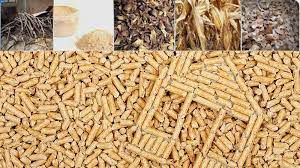
Korea Wood Pellet Imports: 5M Tons & KFQC
Kingwood · June 25, 2026
Korea Is the World’s #3 Wood Pellet Importer
South Korea imports approximately 5 million metric tons of wood pellets per year — ranking third globally behind the United Kingdom (Drax-dominated ~7M tons) and Japan (FIT-driven ~4.25M tons). Korean import volumes have grown roughly 10–12% per year since 2018, driven by the Renewable Portfolio Standard (RPS) — the dominant policy mechanism mandating renewable generation share for Korean power utilities.
For pellet producers and equipment suppliers serving Asian biomass trade, Korea is the single most important destination after Japan, and structurally the most directly tied to Vietnamese supply. The Vietnam-to-Korea pellet trade lane is the largest single bilateral biomass fuel flow in Asia at roughly 2.5 million tons per year.
The Supply Mix: Vietnam-Dominant, Indonesia Rising
Korea’s wood pellet supply mix has restructured significantly since 2022:
| Origin | Approx Share | Primary Channel |
|---|---|---|
| Vietnam | ~50% | Acacia plantation, Hai Phong export, KFQC-certified industrial grade |
| Indonesia | ~20% | Sumatra and Kalimantan plantation residue, palm kernel shell blends |
| Canada | ~6% | Pacific Coast spruce-pine-fir, premium specification |
| EU spot (Baltic) | ~4% | Opportunistic cargo, niche utility procurement |
| Russia (pre-2022) | 0% (was ~20%) | Sanctioned out of market |
| Other (Argentina, Africa) | ~5% | Spot market, growing |
| Domestic (Korean plantation) | ~15% | Very limited, primarily small-scale residential |
The Russian supply withdrawal (~1 million tons annually pre-2022) accelerated Korean import diversification, primarily benefiting Vietnamese capacity expansion. Indonesian growth has been slower than Vietnam due to logistics complexity and palm kernel shell sustainability scrutiny under recent KFQC policy revisions.
KFQC and RPS: The Two-Layer Compliance Framework
Korean wood pellet imports operate under two interacting regulatory frameworks:
RPS (Renewable Portfolio Standard). Enacted under the Energy Act 2012 and managed by the Ministry of Trade, Industry and Energy (MOTIE). Power generators with capacity above 500 MW must supply a rising share of total generation from renewable sources — 13% in 2024 ramping to 25% by 2034 (current statutory framework). Biomass — particularly imported wood pellets — has been the dominant compliance route.
KFQC (Korea Forest Quality Certification). Administered by the Korea Forest Service under the Ministry of Agriculture, Food and Rural Affairs. KFQC is the mandatory quality and sustainability certification for biomass fuel entering RPS compliance — utilities cannot claim RPS credit for non-KFQC fuel. KFQC requires:
- Pellet quality testing per KS M 9part standards
- Registered production facility audits
- Quarterly third-party lab certification
- Documented chain-of-custody from feedstock harvest to delivered pellet
Recent KFQC policy revisions (2023–2025) have progressively tightened sustainability requirements, with explicit limits on palm kernel shell eligibility and increasing emphasis on plantation-origin feedstock with documented sustainability credentials.
The Major Korean Buyers
Korean utility-scale procurement is concentrated across five KEPCO subsidiaries plus a smaller set of independent operators:
KEPCO subsidiaries — the dominant buyers under RPS compliance contracts:
- KOMIPO (Korea Midland Power)
- KOSPO (Korea Southern Power)
- KOWEPO (Korea Western Power)
- KOSEPO (Korea South-East Power)
- EWP (East-West Power)
Each operates dedicated biomass facilities and biomass co-firing capacity at coal plant sites along Korea’s east and west coasts. Donghae Biomass Power Plant on the east coast (dedicated biomass, commissioned 2022) is among the largest single-facility consumers.
Independent operators:
- SK E&S — dedicated biomass generation
- GS EPS — industrial process heat and co-firing
- POSCO Energy — smaller volumes, industrial integration
For Asian exporters, KEPCO subsidiary tenders are the single most important commercial mechanism. Contract tenders typically run quarterly with 12–36 month delivery commitments.
FOB Pricing: $145–$170/Ton from Vietnam in 2026
Industrial-grade FOB Vietnam to Korea pricing has settled at $145–$170/ton in 2024–2026 for KFQC-eligible pellets:
| Pricing Driver | Direction | Approx Impact |
|---|---|---|
| Vietnam acacia harvest yields | Tight supply lifts FOB | $5–$15/ton |
| Bulk shipping (Hai Phong → Incheon/Donghae) | $25–$40/ton baseline | Stable |
| KFQC certification premium | Required for RPS eligibility | $10–$20/ton over baseline |
| Spot vs. long-term contract | Spot can run $15–$30 below | Variable |
| Won-Dollar exchange rate | Won weakness lifts effective FOB | $5–$10/ton effective |
CIF Korean port pricing typically runs $170–$210/ton landed, with KEPCO subsidiary off-take contracts settling slightly below spot under multi-year volume commitments.
Production Capacity Implications for New Entrants
For pellet producers and equipment suppliers thinking about expanding capacity to serve Korean RPS-compliance demand, the practical engineering decisions match closely with the Japan FIT market:
Capacity tier. Korean utility-direct contracts start at 50,000 t/year minimum, with 100,000–250,000 t/year for KEPCO subsidiary off-take. That corresponds to 6–30 t/h continuous production lines. Vietnamese capacity in this tier is the lowest-friction supply path — Indonesian and other Southeast Asian alternatives face higher logistics or feedstock variability costs.
Feedstock specification discipline. KFQC requires moisture ≤10%, ash content per facility specification (typically ≤3% premium, up to 6% co-firing), calorific value ≥4,300 kcal/kg, sulfur ≤0.3%, plus documented chain-of-custody. Acacia plantation feedstock from Vietnam comfortably meets these specs at industrial line throughput.
Certification timeline. KFQC registration takes approximately 6–12 months from initial application through first quarterly audit. Producers planning entry to the KEPCO subsidiary off-take channel should budget for this as fixed lead time alongside equipment commissioning (4–8 months from contract to first production).
Kingwood’s reference installations directly support the Korean export channel: a 12 t/h Vietnam line commissioned in 2024 with documented 23-month payback, and a 24 t/h Vietnam line commissioned in 2023 — both designed to fuel specifications compatible with KFQC requirements and KEPCO subsidiary buyer needs.
Kingwood’s complete wet-feed wood pellet production line configurations are engineered for KFQC-eligible export-grade fuel, with full-scope engineering services covering consultation, line design, equipment manufacture, logistics, installation, commissioning, operator training, and ongoing after-sales support — including the established Vietnam reference base supplying both Japan FIT and Korean RPS supply chains.
Related: Asia-Europe Wood Pellet Supply Chain Series
This article is part of the Kingwood Wood Pellet Market Series — global biomass pellet trade flow analysis covering supply, demand, certification, and pricing dynamics:
FAQ
How many tons of wood pellets does South Korea import each year?
South Korea imports approximately 4.8–5.2 million metric tons of wood pellets annually as of 2024–2026, ranking third globally behind the United Kingdom (~7M tons via Drax) and Japan (~4.25M tons). Volumes have grown roughly 10–12% per year since 2018, driven by the Renewable Portfolio Standard (RPS) which requires Korean utilities to procure a rising share of generation from renewable sources, with biomass co-firing and dedicated biomass plants as the primary compliance path.
Which countries supply the most wood pellets to Korea?
Vietnam is the dominant supplier at approximately 50% of Korean imports — roughly 2.5 million tons annually — leveraging proximity, acacia plantation feedstock, and established Hai Phong port logistics. Indonesia supplies about 20%, with a rising share from Sumatra and Kalimantan plantation residue. Smaller flows come from Canada, EU spot cargoes, and increasing diversification across Southeast Asia after the 2022 cutoff of Russian and Belarusian supply.
What is KFQC and who administers it?
KFQC (Korea Forest Quality Certification) is administered by the Korea Forest Service under the Ministry of Agriculture, Food and Rural Affairs. It is the mandatory quality and sustainability certification for biomass fuel entering the Renewable Portfolio Standard (RPS) compliance market — meaning Korean utilities can only claim RPS credit for KFQC-certified pellet consumption. KFQC requires pellet quality testing per KS M 9part standards, supply chain traceability, and quarterly lab reports from registered production facilities.
Who are the largest Korean wood pellet buyers?
KEPCO subsidiaries (KOMIPO, KOSPO, KOWEPO, KOSEPO, EWP) dominate utility-scale procurement under RPS compliance contracts, with dedicated biomass and biomass co-firing capacity at multiple coal plant sites. SK E&S operates dedicated biomass generation. GS EPS and POSCO Energy contribute smaller industrial volumes. Donghae Biomass Power Plant on the east coast is among the largest single-facility consumers, dedicated biomass facility commissioned 2022.
What is Korea's Renewable Portfolio Standard (RPS)?
Korea's RPS, enacted 2012 under the Energy Act, requires power generators with capacity above 500 MW to supply a rising share of total generation from renewable sources. The target ramps from 13% in 2024 to 25% by 2034 (current statutory framework as of 2026). Biomass — particularly imported wood pellets — has been the dominant compliance route, though policy revisions are gradually tightening sustainability requirements and limiting palm kernel shell eligibility.
What are typical Korea wood pellet import prices in 2026?
FOB Vietnam to Korea pricing settled at $145–$170/ton in 2024–2026 for industrial-grade pellets meeting KFQC and KEPCO buyer specifications. CIF Korean ports (Incheon, Donghae, Mokpo) typically run $25–$40/ton above FOB, reflecting bulk shipping and port handling costs. Long-term off-take contracts trade slightly below spot, with KFQC-certified premium specifications commanding $10–$20/ton over baseline industrial grade.
What pellet quality specifications does the KFQC require?
KFQC specifications align broadly with ISO 17225-2 industrial classifications: moisture ≤10%, ash content per facility specification (typically ≤3% for premium, up to 6% for co-firing), calorific value ≥4,300 kcal/kg, and sulfur ≤0.3%. KFQC additionally requires registered production facility audits, quarterly third-party lab certification, and documented chain-of-custody from feedstock harvest to delivered pellet. Mixed-biomass blends are accepted but face tightening sustainability scrutiny in policy revisions.
What production capacity should an exporter target for Korean utility off-take?
Korean RPS-compliance contracts typically start at 50,000 t/year minimum, with 100,000–250,000 t/year for utility-direct supply to KEPCO subsidiaries. That corresponds to 6–30 t/h continuous production lines. Vietnamese exporters dominate this tier through 12–24 t/h industrial lines. Kingwood's reference Vietnam installations (12 t/h commissioned 2024, 24 t/h commissioned 2023) sit directly within the KFQC-eligible capacity range, with both projects designed to specifications compatible with KEPCO buyer requirements.
- South Korea imported approximately 5.0 million metric tons of wood pellets in 2024, ranking third globally and accounting for roughly 12% of total global wood pellet imports. (2024, Korea Forest Service — Annual Renewable Energy Statistics Report (2024), Biomass Fuel Imports)
- Korea's Renewable Portfolio Standard requires generators above 500 MW to supply 13% of total generation from renewable sources in 2024, rising to 25% by 2034 — with imported wood pellets as the dominant compliance pathway for biomass-eligible generation. (2024, Korea Ministry of Trade, Industry and Energy (MOTIE) — RPS Implementation Guidelines 2024)
- Vietnam supplies approximately 50% of South Korea's wood pellet imports — roughly 2.5 million metric tons annually — making the Vietnam-Korea pellet trade lane the largest single bilateral biomass fuel flow in Asia. (2024, Vietnam Forestry Administration / Korea Customs Service — Bilateral Trade Flow Cross-Reference 2024)