Biomass Pellet Machine Buyer's Guide 2026
Kingwood · May 26, 2026
Choosing the right industrial biomass pellet mill is a capital-intensive decision with long-term operational consequences. This guide covers machine types, technical specifications, production line configuration, supplier evaluation, and realistic cost and ROI figures for buyers in India, Vietnam, Indonesia, and similar markets.
How a Biomass Pellet Machine Works
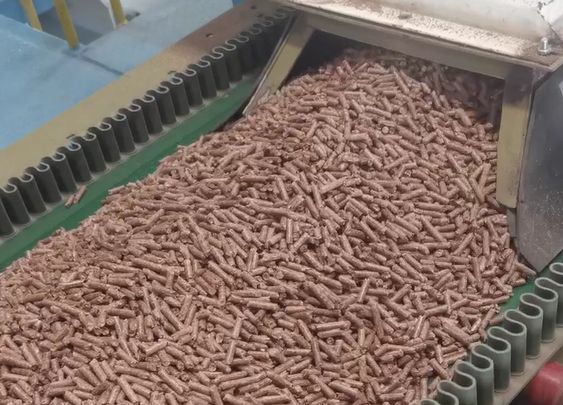
A biomass pellet machine — also called a pellet mill or pellet press — compresses loose biomass into dense cylindrical pellets, typically 6–12 mm in diameter. Output bulk density reaches 600–750 kg/m³, compared to 80–150 kg/m³ for raw wood chips or agricultural residue. This density increase makes pellets substantially more practical to store, transport, and combust.
Biomass is forced through a die — a thick metal plate or ring drilled with precisely sized holes. Pressure and friction generate heat (typically 80–120°C), activating the natural lignin in the biomass as a binding agent. No chemical additives are required for wood-based feedstocks. Rotating knives cut the extruded material to length.
Compatible raw materials include sawdust, wood shavings, wood chips (after size reduction), bark, rice husk, straw, corn stover, sugarcane bagasse, groundnut shells, and energy crops such as bamboo and miscanthus. Moisture content is a critical input: most machines require feedstock at 10–18% moisture (wet basis). Material above 20% moisture requires pre-drying; material below 8% can produce fragile pellets and accelerates die wear.
Flat Die vs Ring Die: Choosing the Right Machine Type
Flat Die Pellet Mills
In a flat die machine, the die sits horizontally and rollers press material through vertical holes. The drive mechanism is simpler, the footprint smaller, and unit costs lower.
- Typical capacity: 50–800 kg/h
- Motor power: 7.5–55 kW
- Price range (2026): USD 1,500–12,000 ex-works China
- Best for: small farms, village-level operations, on-farm residue processing
Flat die machines are mechanically accessible — spare parts are easy to source and basic maintenance can often be performed locally. However, die and roller wear accelerates under continuous industrial use, and output consistency lags behind ring die machines at equivalent throughput.
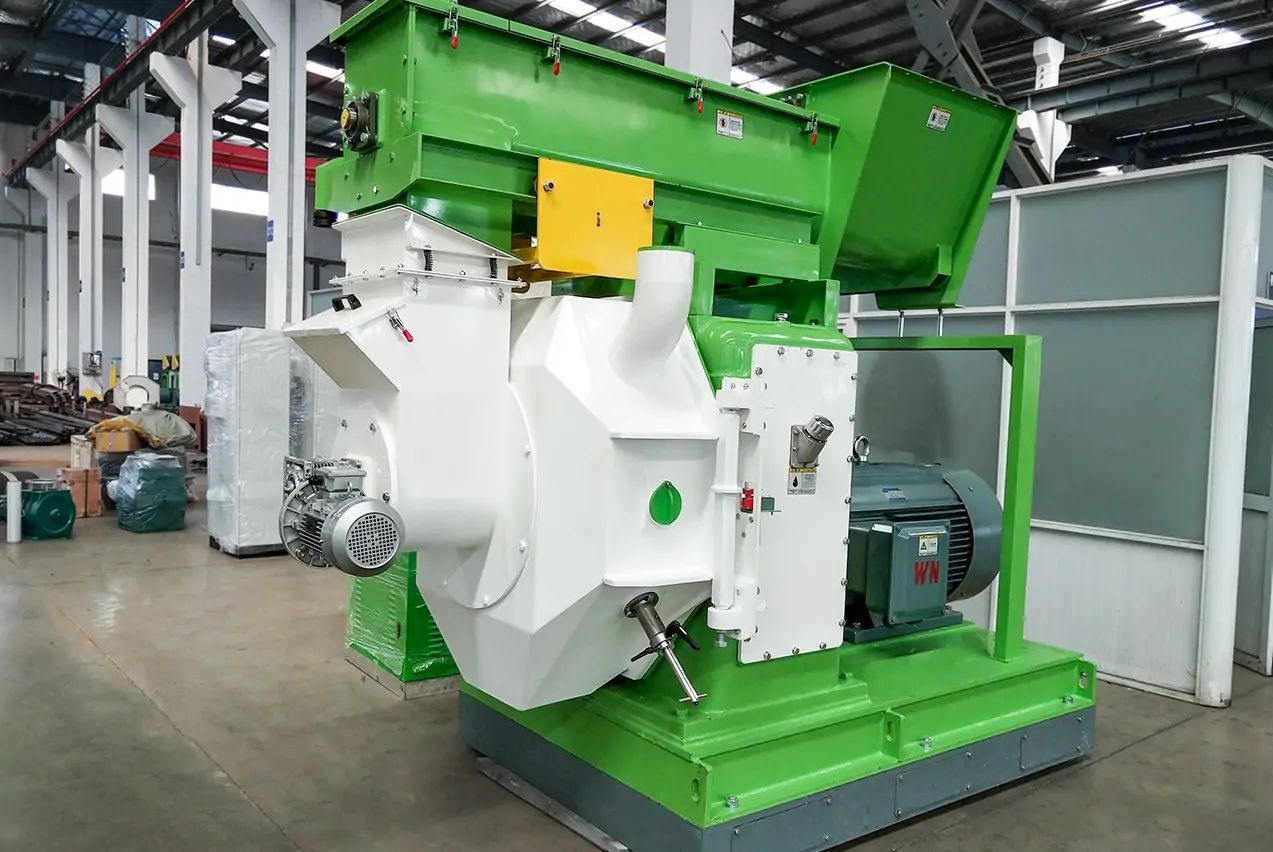
Ring Die Pellet Mills
The ring die design uses a rotating cylindrical die with rollers pressing material outward through the die holes. This geometry distributes wear more evenly and suits continuous, high-volume production. Pellet durability index (PDI) on well-maintained ring die machines typically exceeds 97.5%, which matters for buyers supplying power plants under quality contracts.
- Typical capacity: 500 kg/h to 5+ t/h
- Motor power: 55–400 kW
- Price range (2026): USD 15,000–120,000+ ex-works China
- Best for: commercial pellet plants, industrial fuel supply, export-grade production
| Feature | Flat Die | Ring Die |
|---|---|---|
| Capacity range | 50–800 kg/h | 500 kg/h–5+ t/h |
| Motor power | 7.5–55 kW | 55–400 kW |
| Capital cost | Lower | Higher |
| Die/roller lifespan | Shorter under heavy use | Longer under continuous use |
| Pellet consistency | Moderate | High |
| Best scale | Small/medium | Medium/large industrial |
Technical Specifications to Evaluate Before Buying
Output capacity: Nameplate figures are measured under ideal conditions. Real-world output is typically 80–90% of nameplate. When sizing equipment, work backward from your target annual production, then account for planned operating hours (single shift ≈ 7 productive hours; double shift ≈ 14 hours) and downtime for die changes and maintenance (typically 10–15% of scheduled time).
Energy consumption: Ring die pellet mills typically consume 50–80 kWh per metric ton produced, depending on feedstock density and moisture. For a 1 t/h machine running 7,000 hours/year, that equals 350,000–560,000 kWh annually. At industrial electricity rates of USD 0.06–0.12/kWh — common in Vietnam, India, and Indonesia — this is a significant operating cost variable.
Pellet diameter and quality standards: Standard diameters are 6 mm (household appliances, small boilers), 8 mm (industrial boilers, co-firing), and 10–12 mm (large industrial combustion). Buyers targeting European export markets must comply with ENplus A1 or A2 standards: moisture ≤10%, mechanical durability ≥97.5%, net calorific value ≥16.5 MJ/kg. Verify customer specifications before setting die parameters — retrofitting after production begins is costly.
Configuring a Complete Biomass Pellet Production Line
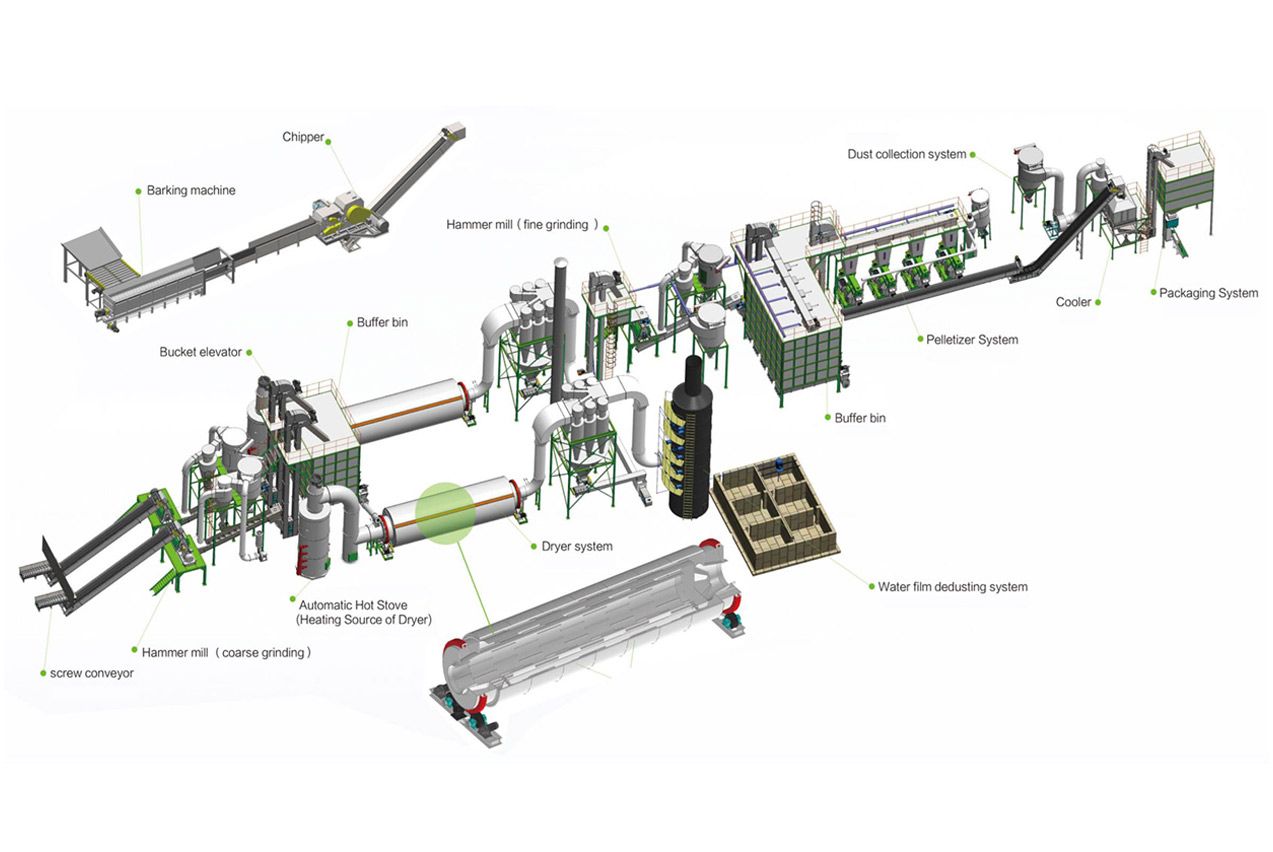
A pellet mill is one stage in a multi-step process. Buyers who purchase only the pellet mill and then identify missing equipment face delays and unplanned capital expenditure. A complete biomass wood pellet production line covers these stages:
Size reduction: Raw material must be reduced to 3–5 mm particle size for a 6–8 mm die. A hammer mill handles sawdust and loose residues; a drum chipper processes logs and branches.
Drying: If feedstock moisture exceeds 18%, drying is required. A drum dryer is standard for continuous industrial lines, with evaporation capacities ranging from 500 kg/h to 5 t/h of water removed. Buyers in Indonesia processing rice husk frequently underestimate drying capacity needed during wet season — feedstock can arrive at 25–30% moisture after rainfall.
Cooling and screening: Pellets exit the mill at 70–90°C with 17–20% surface moisture. A counter-flow cooler brings temperature to within 5°C of ambient and reduces moisture to ≤12%, necessary for safe storage and bagging. A vibrating screen removes fines before packaging.
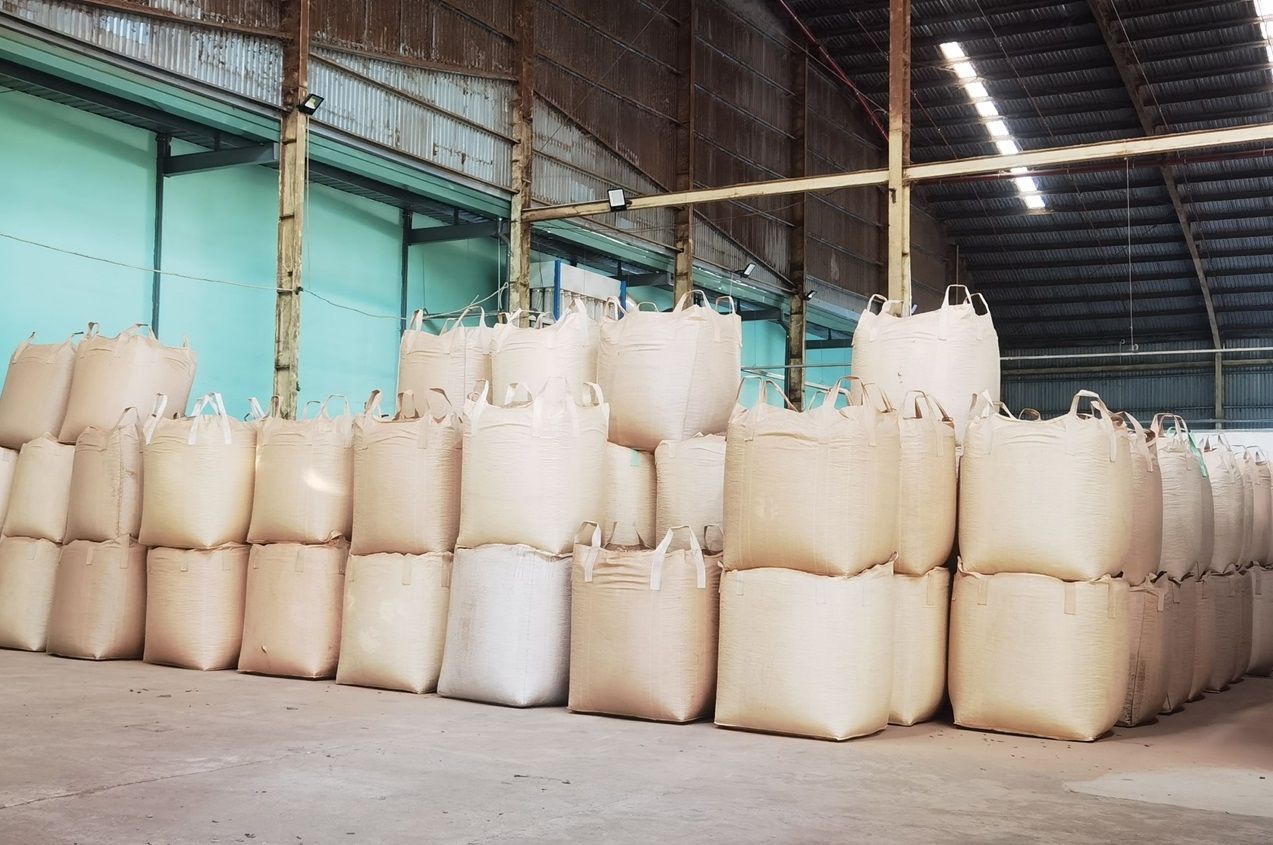
Packaging: Options range from manual 25–50 kg bag-filling stations to automated bulk bagging systems.
How to Evaluate a Biomass Pellet Machine Supplier
Most biomass pellet machines sold globally are manufactured in China, and quality varies substantially across suppliers.
Certifications to request: CE marking (required for EU imports or EU-standard projects), a current ISO 9001 certificate, and optionally SGS or Bureau Veritas pre-shipment inspection reports. Ask for material certificates confirming die and roller steel grades — high-chromium steel or D2 tool steel is preferable for longer wear life.
Remote factory verification: If a site visit is not feasible — common for buyers in India, Vietnam, and Indonesia ordering remotely — request a live video walkthrough of the production floor, CNC machining area, and assembly hall (not a pre-recorded promotional video). Ask for in-production photos of your specific order including die ring markings and motor nameplates. Engage an independent inspection agent (SGS, Bureau Veritas, QIMA) for pre-shipment inspection: cost is typically USD 300–600 and is advisable for orders above USD 20,000.
Key questions before ordering:
- What steel grade is used for the die and rollers, and can you provide material certificates?
- What is the standard warranty period, and does it cover die and roller wear?
- What is the lead time for replacement dies in your required diameter? (Dies typically need replacement every 500–1,500 hours depending on feedstock abrasiveness.)
- Is installation documentation available in English?
- What is the production lead time? Standard configurations typically ship in 25–45 days; customized orders require 45–75 days.
Specifying local power supply voltage and frequency at the time of order is essential. Rewiring a 380V/50Hz motor for a 415V/50Hz or 440V/60Hz market adds cost and delay after delivery.
Price Ranges and ROI Framework for 2026
| Scale | Machine Type | Typical Ex-Works Price (USD) |
|---|---|---|
| Small farm | Flat die, 100–300 kg/h | 2,000–6,000 |
| Small commercial | Flat die or small ring die, 300–800 kg/h | 6,000–20,000 |
| Medium industrial | Ring die, 1–2 t/h | 25,000–55,000 |
| Large industrial | Ring die, 2–5 t/h | 55,000–120,000 |
These are pellet mill prices only. A complete production line — including hammer mill, dryer, cooler, conveying, and controls — typically costs 2.5–4× the pellet mill price alone.
ROI variables: Pellet selling prices range from USD 80–130/ton for domestic industrial markets in South and Southeast Asia, and USD 180–260/ton for ENplus-grade export pellets. Feedstock costs run USD 10–40/ton for sawdust or agricultural residue depending on location and season. Operating costs (energy, labor, maintenance) are typically USD 20–45/ton produced.
A 1 t/h ring die line running 6,000 hours/year and producing 6,000 tons at a margin of USD 40/ton generates approximately USD 240,000/year gross margin before fixed costs. Payback on a USD 150,000 complete line would be in the range of 12–24 months — consistent with documented results from Kingwood installations, including a 12 t/h Vietnam wood pellet line that achieved payback in 23 months.
Applications Driving Demand in Key Markets
Biomass pellets substitute for coal, natural gas, and fuel oil in thermal energy applications. Industrial and commercial heat users — textile mills, paper mills, food processing plants, brick kilns, and tobacco curing operations — are the primary buyers in South and Southeast Asia. Co-firing pellets with coal in existing power plants is an established pathway in India and Vietnam, with several state utilities having published co-firing targets that create large-volume domestic demand.
Vietnam and Indonesia are among the world’s largest wood pellet exporters, primarily supplying South Korea and Japan under long-term biomass power contracts. Buyers establishing pellet plants in these countries with adequate feedstock access can target export markets, provided output meets the moisture, ash, and durability standards required by destination market regulations.
For a detailed breakdown of use cases by industry, see biomass pellet applications.
What to Expect From Kingwood at Each Buying Stage
Kingwood — formally Jiangsu Kingwood Industrial Co., Ltd. — designs and manufactures pellet mills, complete production lines, and auxiliary equipment from its 25,000 m² production facility in Liyang, Jiangsu Province. With 27 years of R&D experience and equipment operating in 30 countries, the technical team can review feedstock type, moisture range, and target output before recommending a line configuration — including whether drying is actually required and which die compression ratio suits the specific material.
Standard ring die lines ship in 30–40 days. Custom configurations or orders requiring third-party inspection should allow 50–70 days from order confirmation to port departure. CE certificates, packing lists, and English-language installation manuals are provided as standard for all export orders.
Contact the Kingwood technical team with your feedstock type, target capacity, and available power supply to receive a preliminary equipment list and budget estimate.
FAQ
What is the difference between a flat die and ring die biomass pellet machine?
Flat die machines use a horizontal die with rollers pressing material downward through vertical holes. They handle 50–800 kg/h and suit small-scale or farm operations. Ring die machines use a rotating cylindrical die and suit continuous industrial production at 500 kg/h to 5+ t/h, producing more consistent pellet density and durability.
What moisture content does feedstock need to be before pelletizing?
Most pellet mills require feedstock at 10–18% moisture (wet basis). Material above 20% moisture needs pre-drying with a drum dryer. Material below 8% moisture can produce fragile pellets and accelerates die wear.
What supporting equipment is required beyond the pellet mill itself?
A complete line includes size reduction (hammer mill or drum chipper), drying (drum dryer if feedstock exceeds 18% moisture), pelletizing, cooling (counter-flow cooler), screening, and packaging. Purchasing only the pellet mill and sourcing other equipment separately typically causes delays and unplanned capital costs.
What certifications should a biomass pellet machine supplier hold for export orders?
Request CE marking for EU-bound equipment, a current ISO 9001 certificate, and optionally SGS or Bureau Veritas pre-shipment inspection reports. Ask for material certificates confirming die and roller steel grades.
What is a realistic payback period for a 1 t/h ring die pellet production line?
Under typical South and Southeast Asian market conditions — pellets selling at USD 80–130/ton, feedstock at USD 10–40/ton, operating costs at USD 20–45/ton — a complete line investment of around USD 150,000 can achieve payback in 12–24 months. Feedstock price volatility and local demand must be modeled independently.
How do I verify a Chinese pellet machine supplier without visiting the factory?
Request a live video walkthrough of the production floor (not a recorded video), ask for in-production photos of your specific order, and engage an independent inspection agent such as SGS or QIMA for pre-shipment inspection — typically USD 300–600 and advisable for orders above USD 20,000.
What pellet quality standards apply for European export markets?
ENplus A1 or A2 certification requires moisture content ≤10%, mechanical durability ≥97.5%, and net calorific value ≥16.5 MJ/kg for wood pellets. Die specifications and dryer settings must be configured to meet these parameters before production begins.
- Ring die pellet mills typically consume 50–80 kWh per metric ton of pellets produced, depending on feedstock density and moisture content. (2025, IEA Bioenergy Task 32 — Biomass Combustion and Co-firing)
- Vietnam and Indonesia rank among the world's top wood pellet exporters, primarily supplying South Korea and Japan under long-term biomass power contracts. (2024, USDA Foreign Agricultural Service — Wood Pellet Trade Data)